
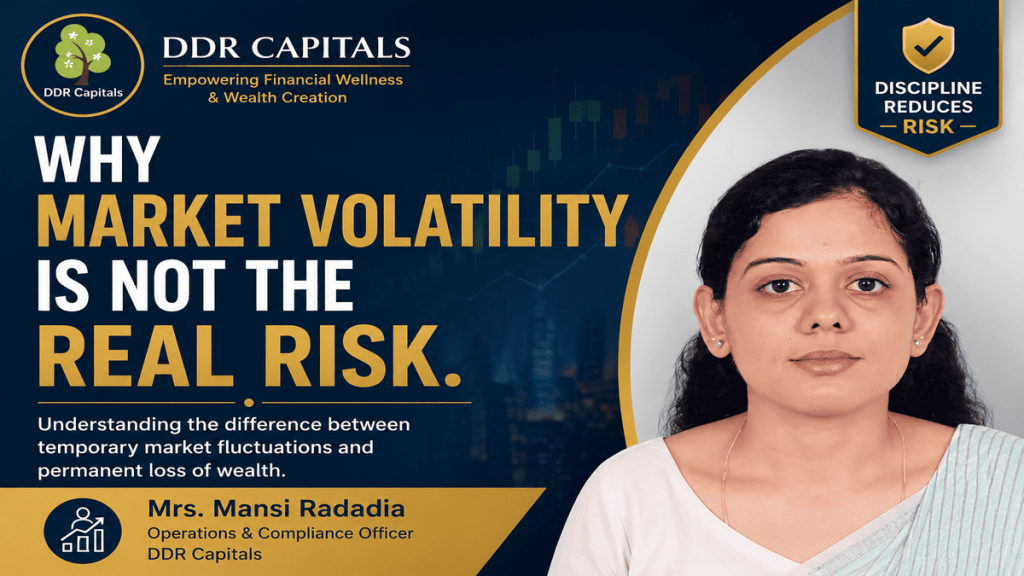
Understanding the difference between temporary market fluctuations and permanent loss of wealth.
Introduction
Every investor experiences market volatility.
Some days the market rises sharply. Other days it falls unexpectedly. News headlines often amplify these movements, making investors believe that volatility itself is the greatest threat to their financial future.
In reality, market volatility is a normal part of investing—not the real risk.
The greater danger comes from emotional decisions made during volatility.
Emotional investment decisions can create permanent financial setbacks.
Stay disciplined. Stay invested. Stay focused on your long-term financial goals.
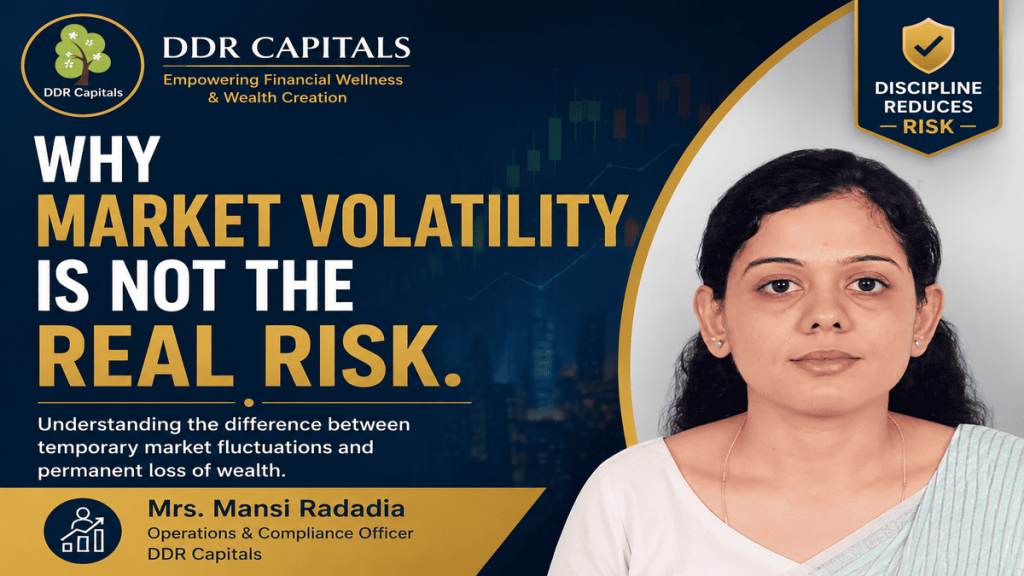
MARKET VOLATILITY
IS NOT THE REAL RISK.
Bottom Heading
Emotional Decisions Are.
Top Right Badge
🛡️ DISCIPLINE REDUCES RISK
What Is Market Volatility?
Market volatility refers to the natural rise and fall in investment prices over short periods.
Economic news, interest rate changes, geopolitical events and investor sentiment can all influence market movements.
Volatility is temporary.
It does not automatically mean your long-term investment strategy has failed.
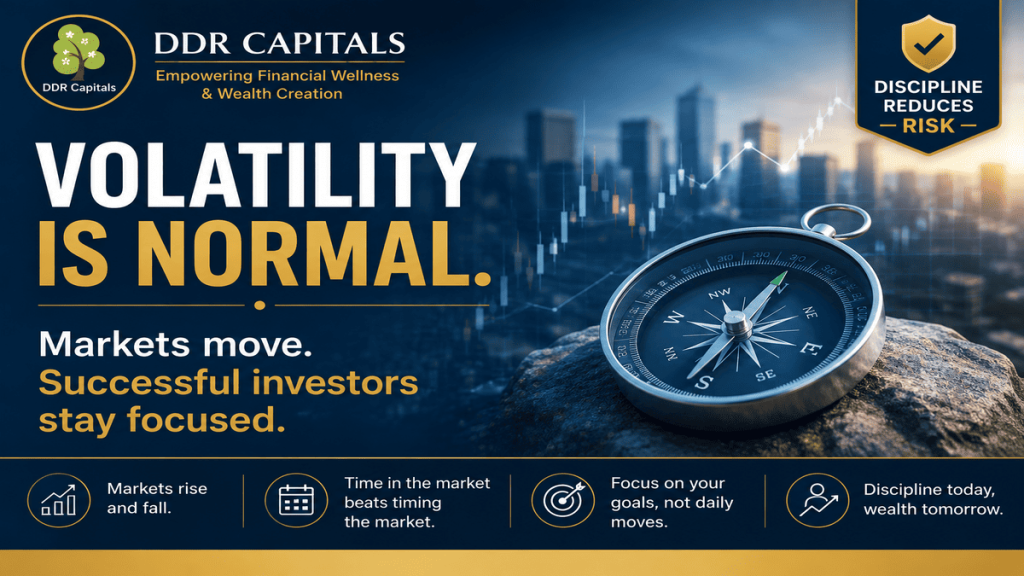
VOLATILITY IS NORMAL.
Markets move.
Successful investors stay focused.
Why Investors Fear Volatility
Most investors are comfortable when markets rise.
Fear appears when prices decline.
Common reactions include:
- Selling investments in panic.
- Stopping SIPs.
- Waiting endlessly for the “perfect” time to reinvest.
- Following market rumours.
Unfortunately, these decisions often lock in losses that could have been temporary.
Learn why investor behaviour matters more than market performance in our article The Hidden Behavior Gap in Wealth Creation.
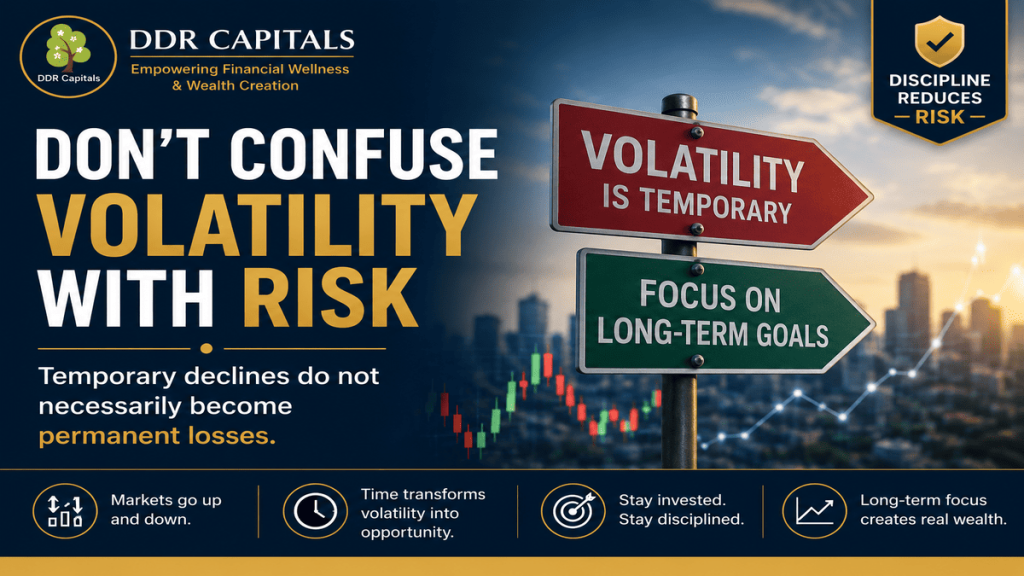
DON’T CONFUSE
VOLATILITY WITH RISK
Temporary declines do not necessarily become permanent losses.
What Is the Real Risk?
The real risks are:
• Selling quality investments during temporary declines.
• Delaying investments while waiting for certainty.
• Ignoring long-term financial goals.
• Allowing emotions to drive investment decisions.
These behaviours reduce the likelihood of achieving long-term wealth creation.
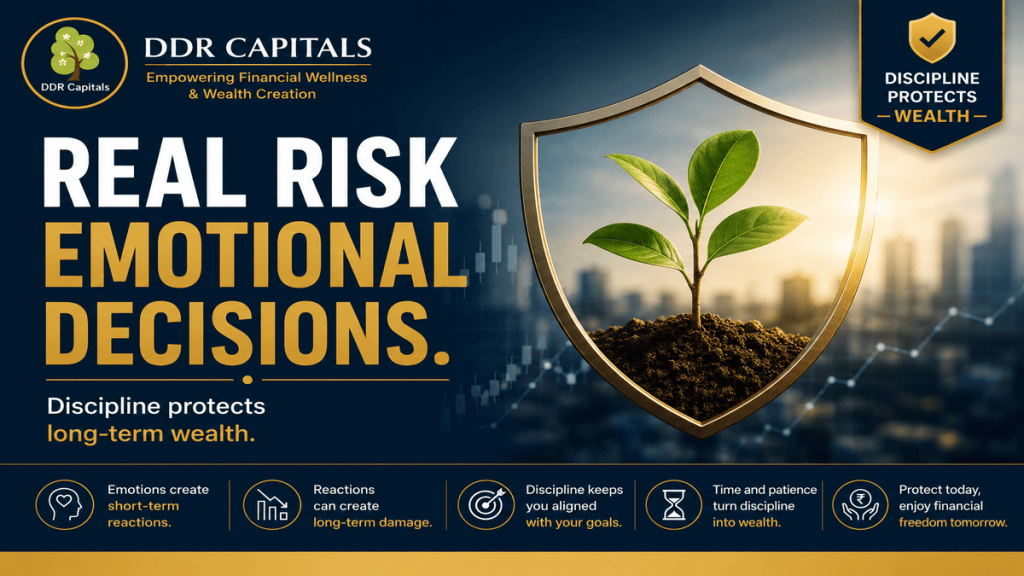
REAL RISK
EMOTIONAL DECISIONS
Discipline protects long-term wealth.
Why Guidance Matters
A trusted financial advisor helps investors:
- Stay focused on financial goals.
- Maintain investment discipline.
- Understand normal market cycles.
- Avoid emotional reactions during volatility.
- Continue long-term wealth creation.
Guidance provides confidence when markets become uncertain.
Professional guidance is not about predicting the market—it is about helping investors remain disciplined throughout different market cycles. Read our article A Good Advisor Doesn’t Predict Markets.
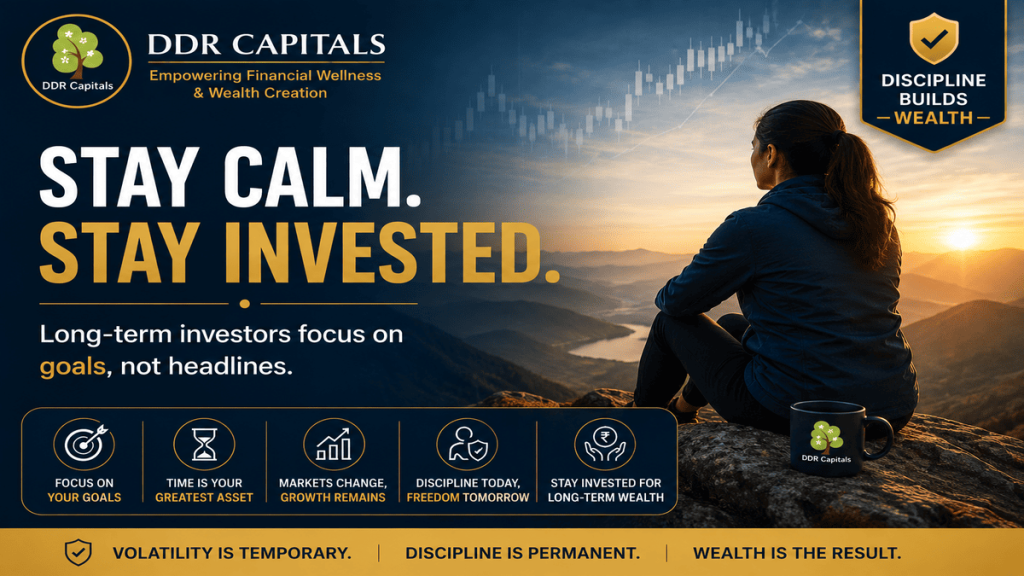
STAY CALM.
STAY INVESTED.
Long-term investors focus on goals, not headlines.
Key Takeaways
✅ Market volatility is normal.
✅ Short-term fluctuations are temporary.
✅ Emotional decisions create permanent damage.
✅ Stay disciplined during uncertain markets.
✅ Long-term investing rewards patience.
Conclusion
Market volatility is unavoidable.
Emotional investing is optional.
Investors who understand this difference are better positioned to remain disciplined, stay invested and allow their long-term financial plans to succeed.
Successful investing is not about avoiding volatility.
The same principle applies to compounding. Long-term wealth is created by remaining invested and allowing time to work in your favour. Read Power of Compounding in Investing to understand why patience is one of an investor’s greatest strengths.
It is about avoiding decisions that turn temporary market movements into permanent financial setbacks.
Expand your investment knowledge with our related articles:
Continue Your Investor Education Journey
Article 01 : Every Bull Market Creates Experts. Every Bear Market Exposes Them.
Article 02: The Real Cost of Investing Without Guidance.
Article 03: Why Good Investors Still Make Bad Decisions
Article 04: The Biggest Threat to Your Wealth Is Not Market Risk
Article 05: Why Investors Stop SIPs at the Worst Possible Time
Article 06: A Good Advisor Doesn’t Predict Markets
Article 07: The Hidden Behavior Gap in Wealth Creation
Article 08: Compounding Needs Time. Guidance Helps Investors Stay the Course.
Disclaimer
This article is intended solely for investor education and awareness. It should not be considered investment advice or a recommendation to buy or sell any financial product. Investors should consult a qualified financial professional before making investment decisions.
About Author
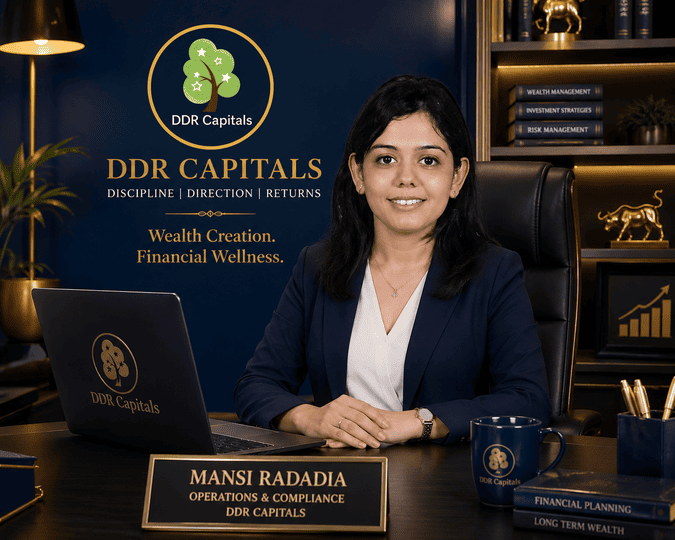
Mrs. Mansi Radadia , Operations & Compliance Officer, DDR Capitals. Contributor – Investor Education Series. With a strong focus on investor servicing, operational excellence and regulatory compliance, she is committed to helping investors navigate their financial journey with confidence. She believes successful wealth creation is built on discipline, informed decision-making and staying invested through changing market cycles. She actively supports investor education initiatives and encourages investors to explore Investor Education Resources.