
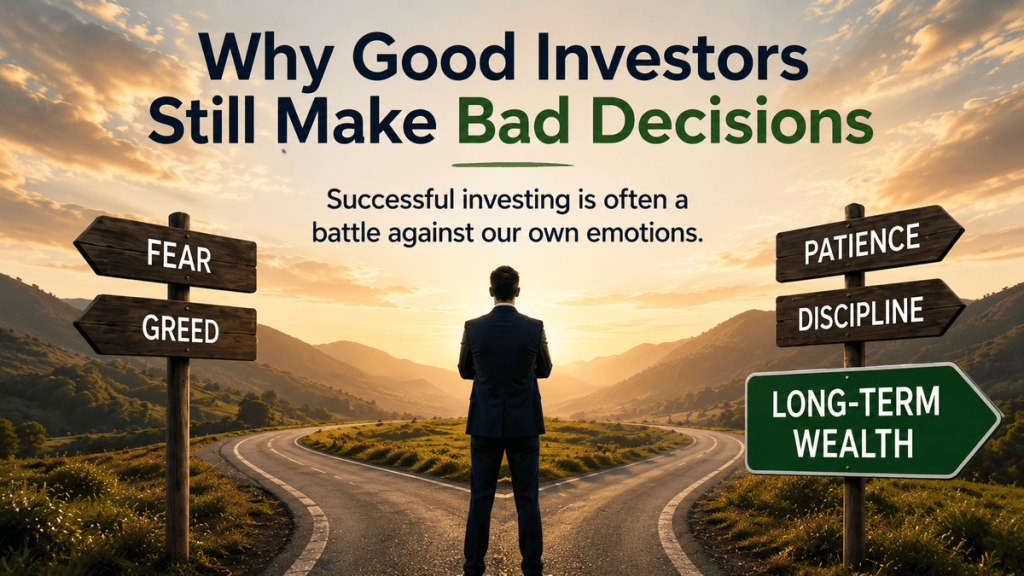
Good investing is not only about knowledge, research or selecting the right investment products. Many investors understand the importance of diversification, long-term investing and disciplined financial planning. Yet even experienced investors can make decisions that work against their own financial goals. The reason is simple: investing is not purely logical. Emotions such as fear, greed, overconfidence and impatience often influence decisions during periods of market uncertainty. Understanding investor behaviour is one of the most important steps toward building long-term wealth.
The Hidden Influence of Investor Behaviour
Many investment mistakes are not caused by a lack of knowledge. They are caused by emotional reactions to market events. When markets rise sharply, investors often become overconfident and take unnecessary risks. When markets decline, fear can lead them to sell quality investments at the wrong time.
This behaviour is common across all experience levels. Even knowledgeable investors can struggle to remain objective when their portfolio values fluctuate significantly.
The challenge is that emotions often encourage short-term decisions, while successful investing requires a long-term perspective. As discussed in our article on bull and bear market cycles, investor psychology often has a greater impact on investment outcomes than market conditions themselves.
Investors who recognise these behavioural tendencies are better positioned to remain disciplined and focused on their financial goals.
Common Mistakes Investors Make During Market Volatility
Market volatility often triggers emotional responses that can lead to poor investment decisions. While every market correction feels different, investor behaviour tends to follow familiar patterns.
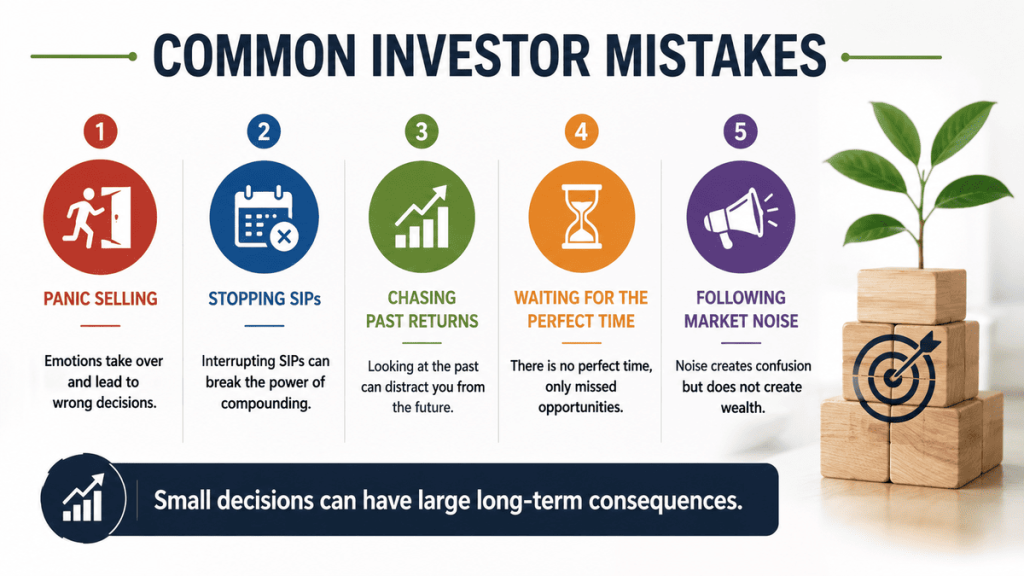
Many investors panic and sell when markets decline sharply, fearing further losses. Others stop their SIPs during periods of uncertainty, interrupting the power of long-term compounding. Some investors chase funds that have recently delivered strong returns, only to discover that past performance does not guarantee future results.
Another common mistake is waiting for the “perfect” time to invest. Unfortunately, perfect opportunities are usually visible only in hindsight. Investors who remain on the sidelines often miss recoveries and wealth-creation opportunities.
Market noise can also influence decisions. Daily headlines, social media opinions and short-term predictions often create confusion rather than clarity. Successful investors focus on their long-term objectives instead of reacting to every market movement.
These decisions may appear small at the time, but their long-term impact on wealth creation can be significant.

Why Guidance Matters More Than Stock Selection
Many investors spend considerable effort searching for the best-performing fund, stock or investment strategy. While investment selection is important, long-term success often depends more on investor behaviour than product choice.
A well-constructed financial plan can be undermined by emotional decisions. Selling during market declines, changing strategies too frequently or abandoning long-term goals can have a greater impact on outcomes than selecting a slightly better investment product.
This is where professional guidance can add significant value. Good guidance provides perspective during uncertain times, helps investors remain focused on their objectives and encourages disciplined decision-making when emotions begin to influence actions.
Rather than attempting to predict every market movement, successful investors focus on consistency, asset allocation and staying committed to their financial plan. As discussed in our article on guided investing versus direct investing, professional guidance often helps investors avoid costly behavioural mistakes that can reduce long-term wealth creation.
The objective is not to eliminate market volatility. The objective is to ensure that temporary market events do not permanently derail long-term financial goals.

A Simple Question Every Investor Should Ask
Before making any major investment decision, investors should ask themselves a simple question:
“Am I making this decision based on my financial plan or my emotions?”
If the answer is driven by fear, excitement, market headlines or recent performance, it may be worth pausing and reassessing the decision.
Most successful investors are not those who accurately predict every market movement. They are those who remain disciplined when others become emotional, patient when others become impatient and committed when others abandon their plans.
Financial markets will always experience periods of optimism and pessimism. Economic cycles, geopolitical events and market volatility are unavoidable. What investors can control is their own behaviour and decision-making process.
The ability to stay invested through uncertainty is often one of the most valuable investment skills an individual can develop.
You may also find these articles helpful:
• Every Bull Market Creates Experts. Every Bear Market Exposes Them
• Guided Investing vs Direct Investing
Final Thoughts
Good investors are not immune to mistakes. They simply recognise that successful investing involves managing behaviour as much as managing money.
Fear, greed, impatience and overconfidence can influence even the most experienced investors. The challenge is not avoiding emotions entirely. The challenge is ensuring that emotions do not dictate investment decisions.
Wealth is rarely created through perfect market timing. More often, it is created through discipline, consistency, patience and staying invested through multiple market cycles. Research on behavioural biases in investing shows that emotions often have a greater impact on investment outcomes than market conditions themselves.
By understanding investor behaviour and maintaining a long-term perspective, investors can make better decisions and improve their chances of achieving their financial goals.
Ask Yourself:
- Have you ever stopped a SIP during a market correction?
- Have you invested based on recent performance?
- Have market headlines influenced your investment decisions?
Share your thoughts in the comments or connect with DDR Capitals to discuss your long-term investment journey.
About the Author

Mrs. Mansi Radadia serves as Operations & Compliance Officer at DDR Capitals. With a strong focus on investor servicing, operational excellence, and regulatory compliance, she is committed to helping investors navigate their financial journey with confidence. She believes that successful wealth creation is built on discipline, informed decision-making, and staying invested through changing market cycles.