
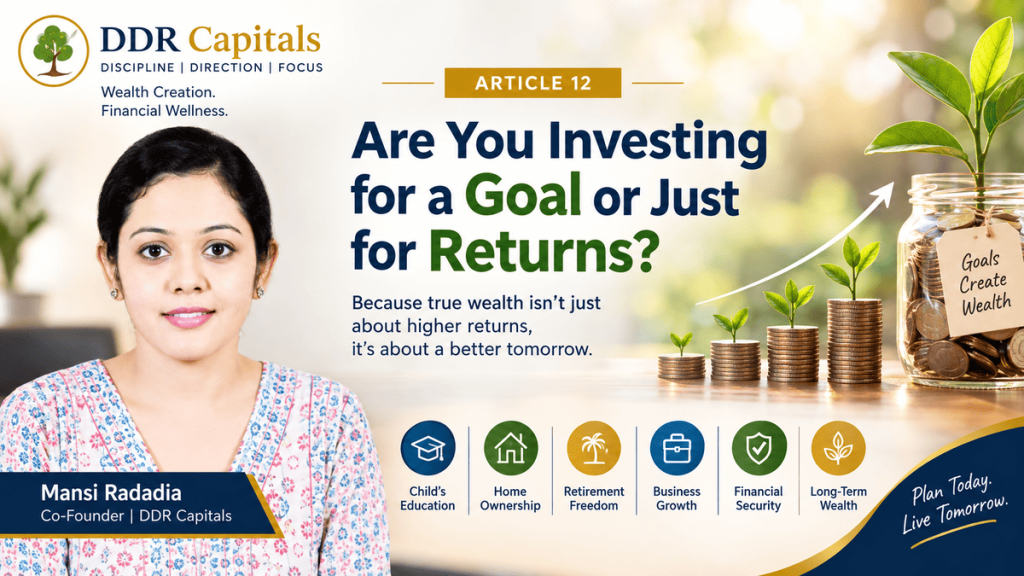
A high return is not automatically a successful investment if it does not help you reach the goal for which you invested.
Investors often begin conversations with one question:
“How much return can I get?”
It is an understandable question.
Investing for a goal gives your money a clear purpose and helps you evaluate your investment strategy beyond short-term returns.
Returns matter. They influence how quickly wealth can potentially grow and whether an investment can keep pace with inflation.
But there is another question that may be even more important:
“What am I investing this money for?”
An investment portfolio is not successful simply because it has generated a good return.
It is successful when it is appropriately structured to help an investor work toward important financial goals.
That distinction can completely change the way we think about investing.
Returns Are a Number. Goals Give That Number a Purpose.
Imagine two investors.
Investor A says:
“My portfolio returned 14% last year.”
Investor B says:
“My investments are structured to help me fund my child’s education in eight years.”
Which investor is making the more meaningful statement?
The first tells us what happened to the money.
The second tells us why the money exists in the first place.
Returns tell you about performance.
Goals tell you about purpose.
Good investing requires understanding both.
Why Chasing Returns Can Be Dangerous
When investors focus primarily on returns, they can easily become attracted to whatever has performed best recently.
A fund that delivered excellent returns last year suddenly looks attractive.
A stock that has risen sharply attracts attention.
A particular asset class becomes popular.
The investor moves money toward the recent winner.
But yesterday’s winner may not necessarily be the right investment for tomorrow’s goal.
Past performance does not guarantee future results.
More importantly, the highest-returning investment is not automatically the most suitable investment for every investor or every goal.
The right question is not:
“Which investment gave the highest return?”
It is:
“Which investment approach is appropriate for this goal, given my time horizon and ability to take risk?”
Every Goal Has a Deadline
A financial goal is different from a general desire to build wealth.
Consider these examples:
- Retirement in 20 years
- Child’s education in 10 years
- Buying a home in 5 years
- A major business requirement in 3 years
- A planned family expense in 18 months
Each goal has a different time horizon.
That matters because the amount of risk an investor can reasonably consider may depend partly on when the money will be needed.
An investor with a long-term retirement goal may have more time to experience market cycles.
An investor approaching a major financial requirement may have less time to recover from a significant decline.
Therefore, time horizon should be part of the investment decision—not an afterthought.
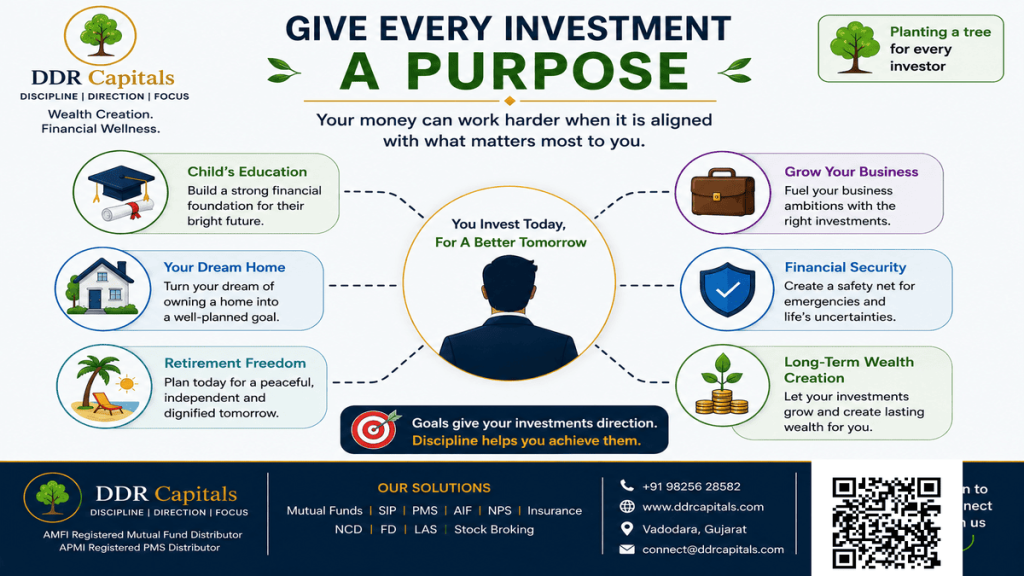
DON’T JUST ASK: “WHAT RETURN WILL I GET?”
Ask:
“WHAT GOAL IS THIS MONEY SUPPOSED TO HELP ME ACHIEVE?”
Purpose gives your investment strategy direction.
Goal-Based Investing Changes the Conversation
Once you identify a goal, the investment conversation becomes more structured.
Instead of asking:
“Where can I get the highest return?”
you can ask:
“How much do I need?”
“When will I need it?”
“How much can I invest?”
“What level of risk can I reasonably accept?”
“How much progress am I making toward the goal?”
These questions create a more disciplined investment framework.
The objective is no longer simply to beat a particular return number.
The objective is to make meaningful progress toward a financial objective.
Your Portfolio May Have Multiple Jobs
Most investors don’t have just one financial goal.
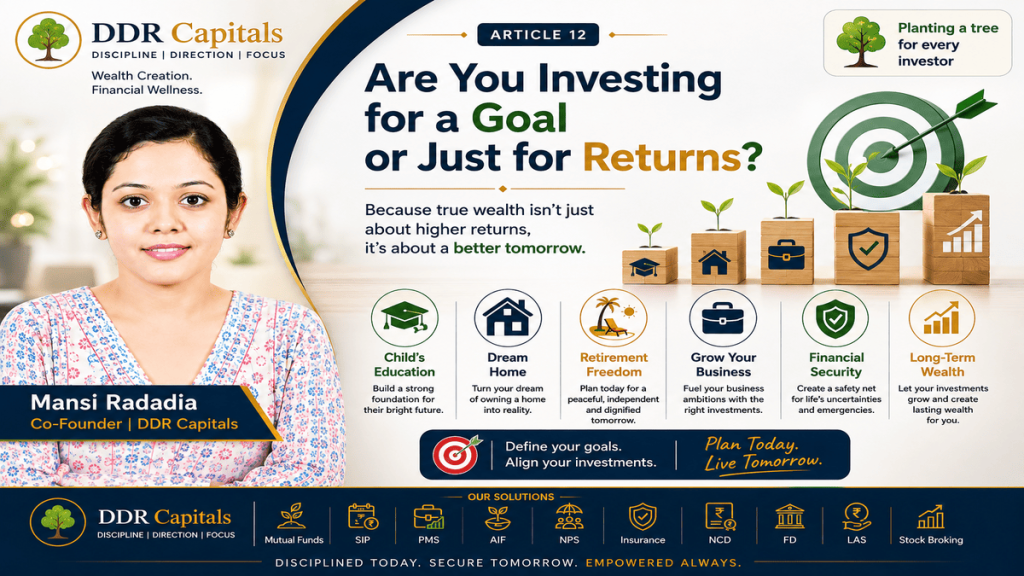
You may simultaneously be investing for:
🏠 Home
🎓 Education
🌴 Retirement
💼 Business
🛡️ Financial security
🌱 Long-term wealth creation
Trying to manage all these goals as though they were one investment objective can make portfolio decisions unnecessarily complicated.
A better approach is to give each major goal its own identity.
That does not necessarily mean opening a separate account or buying a separate product for every goal.
It means knowing which portion of your overall wealth is intended to serve which purpose.
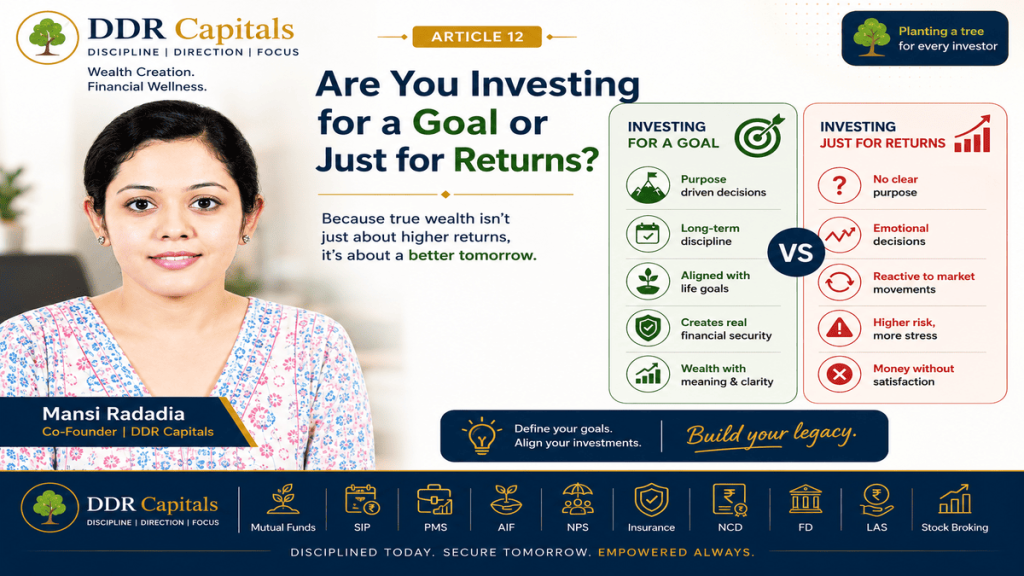
YOUR MONEY CAN HAVE DIFFERENT JOBS.
Retirement ≠ Education ≠ Home ≠ Short-Term Needs
Different goals may require different time horizons, priorities and investment approaches.
Don’t Let Short-Term Performance Distract You
Suppose your retirement portfolio declines temporarily during a market correction.
If retirement is still 20 years away and your overall strategy remains appropriate, a short-term decline does not automatically mean the investment strategy has failed.
Now consider a different situation.
You need a substantial amount of money next year for a known financial goal, and the money is exposed to significant market fluctuations.
The same market decline may have much greater relevance.
This is why the same return cannot be interpreted in isolation from the goal and time horizon.
Performance needs context.
The Difference Between Return and Progress
This is one of the most important ideas in goal-based investing.
An investment can produce a positive return and still be inadequate for a particular goal.
For example, if an investor’s goal requires a certain level of capital over a defined period, simply generating a positive return does not tell us whether the investor is on track.
Instead, investors should periodically ask:
Am I making sufficient progress toward my goal?
That is a much more meaningful question than simply asking whether the portfolio is up or down.
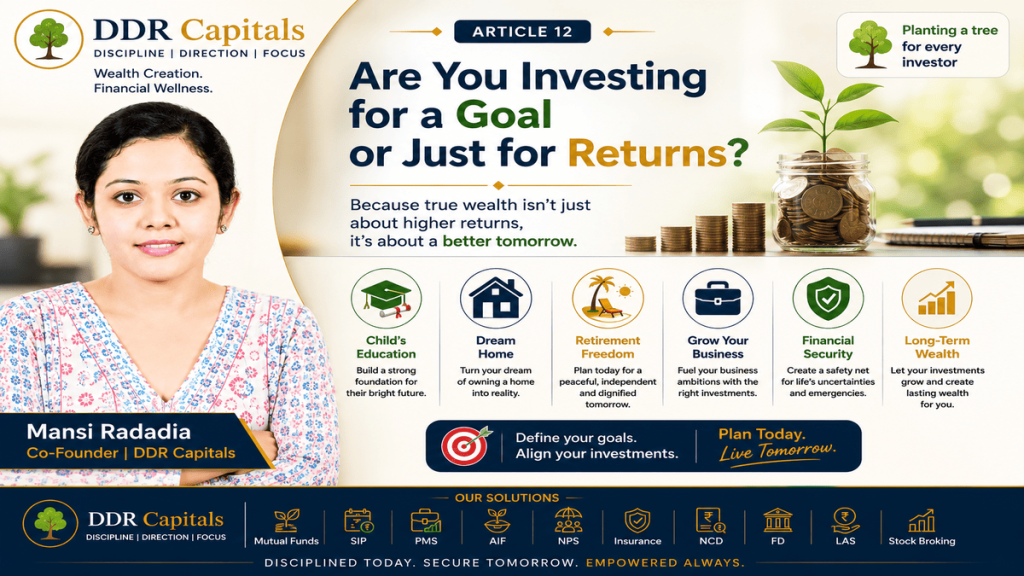
A PORTFOLIO’S SUCCESS SHOULD BE VIEWED IN CONTEXT.
Return tells you what happened.
Progress tells you whether you are moving toward the goal.
What If Your Goal Changes?
Goals are not permanent.
Life changes.
Income changes.
Family responsibilities change.
Priorities change.
A goal that seemed important five years ago may no longer have the same importance today.
Therefore, goal-based investing is not a “set it once and forget it” process.
Review your goals periodically.
Ask:
- Is the target amount still realistic?
- Has the deadline changed?
- Has my income changed?
- Has my ability to invest changed?
- Has my risk capacity changed?
- Am I still on track?
If the answers change, the investment strategy may need to be reviewed.
The 5-Minute Goal Test
Take five minutes and write down your major financial goals.
For each goal, answer these five questions:
1. What is the goal?
Be specific.
2. When will I need the money?
Write down the approximate year.
3. How much might I need?
Use a realistic estimate and consider inflation where appropriate.
4. How much am I investing toward it?
Look at your current contribution and existing investments.
5. Am I on track?
If you don’t know, that itself is useful information.
It means the goal needs further analysis.
BEFORE CHASING RETURNS, KNOW YOUR GOAL.
Goal → Amount → Time Horizon → Risk → Investment Strategy → Regular Review
The clearer the goal, the more meaningful the investment decision becomes.
A Better Way to Think About Investment Returns
Returns should not be ignored.
They matter.
But returns are a means, not the ultimate purpose of most personal investments.
The real purpose is what those returns may help you accomplish.
A retirement corpus.
A child’s education.
A home.
Financial independence.
A future business opportunity.
A secure financial future.
When investors connect their investments to meaningful goals, short-term market movements can become easier to put into perspective.
The question changes from:
“Why did my portfolio fall this month?”
to:
“Has anything changed about the goal this money is intended to serve?”
That is a much more constructive question.
Investing for a goal means measuring progress against your financial objectives, not simply comparing portfolio returns.
Key Takeaways
- Investment returns matter, but they should not be viewed in isolation.
- Every major investment should have a clear purpose.
- Financial goals give investment decisions direction.
- Time horizon is an important part of determining an appropriate investment approach.
- The highest recent return is not automatically the right choice for every goal.
- Different goals can have different priorities, deadlines and risk considerations.
- Measure progress toward your goal, not just portfolio performance.
- Review your goals as your financial circumstances change.
- Goal-based investing can help investors remain focused during short-term market fluctuations.
- Before asking “How much return can I get?”, ask “What am I investing for?”
Conclusion
Investing for returns can make you focus on numbers.
Investing for goals makes you focus on purpose.
Returns are important because they can help your money grow.
But the reason you are investing is usually much bigger than a percentage shown on a statement.
You are investing for something.
A future.
A responsibility.
A dream.
A sense of financial security.
So, the next time you review your portfolio, don’t begin with:
“What return did I earn?”
Begin with:
“What is this money supposed to help me accomplish?”
Then ask whether your investment strategy, time horizon, risk level and contributions remain aligned with that purpose.
Because ultimately, successful investing isn’t just about growing money. It’s about giving your money a job—and helping it work toward a meaningful goal.
Continue Your Investor Education Journey
Article 8: Power of Compounding in Investing
Article 9: Why Market Volatility Is Not the Real Risk
Article 10: The Hidden Value of Financial Advice
Article 11: The 10-Minute Investment Health Check Every Investor Should Do
Article 12: Are You Investing for a Goal or Just for Returns?
Disclaimer
This article is intended solely for investor education and awareness. It should not be construed as investment advice, a recommendation, or a solicitation to buy or sell any financial product or security. Investment decisions should be made after considering individual financial circumstances, investment objectives, time horizon and risk profile. Past performance does not guarantee future results. Investors should consult an appropriately qualified professional where necessary.
About the Author

Mrs. Mansi Radadia , Operations & Compliance Officer, DDR Capitals. Contributor – Investor Education Series. With a strong focus on investor servicing, operational excellence and regulatory compliance, she is committed to helping investors navigate their financial journey with confidence. She believes successful wealth creation is built on discipline, informed decision-making and staying invested through changing market cycles. She actively supports investor education initiatives and encourages investors to explore Investor Education Resources.