
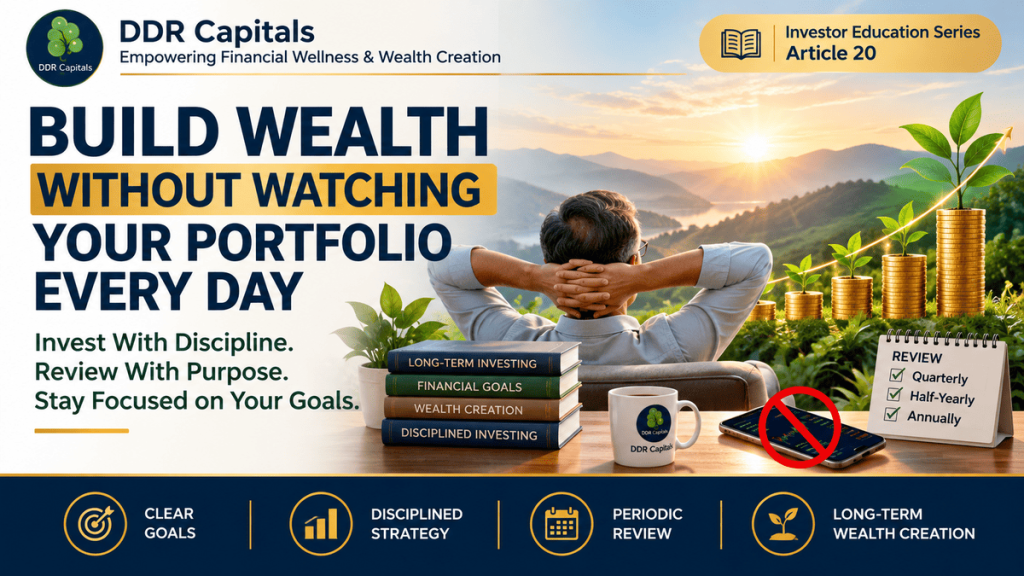
Introduction: Are You Investing, or Just Watching Your Investments?
How often do you check your investment portfolio?
Once a month? Once a week? Every morning? Or perhaps several times a day?
With investment apps and online platforms, checking portfolio values has become extremely easy. Investors can see market movements, portfolio valuations, individual fund returns and daily profit or loss with just a few taps.
But there is an important question worth asking:
Is checking your portfolio more frequently actually helping you become a better investor?
For many investors, the answer may be no.
Long-term wealth creation is not about watching every market movement. It is about having a suitable investment strategy, remaining disciplined, understanding risk and allowing investments sufficient time to work.
This does not mean ignoring your investments. It means knowing when to monitor, when to review and when action is genuinely necessary.
The objective is simple: build wealth with discipline rather than allowing daily market movements to control your investment decisions.
1. The Hidden Problem With Checking Your Portfolio Every Day
Imagine investing in a mutual fund with a long-term investment horizon of ten years.
You have selected the investment after considering your financial goals, risk tolerance and investment period.
However, you start checking its value every morning.
On a positive market day, you feel confident. When markets decline, you become concerned. If the portfolio falls for several consecutive days, you begin questioning your original investment decision.
Gradually, your attention shifts from the long-term objective to short-term fluctuations.
This behaviour can create several problems:
- Unnecessary anxiety: Daily market movements may create stress even when your investment strategy remains appropriate.
- Emotional decisions: Fear and excitement can influence investment choices.
- Frequent switching: Investors may move between funds or asset classes without a meaningful reason.
- Loss of perspective: Short-term performance can distract from long-term financial goals.
- Reduced discipline: Investors may abandon a suitable strategy because of temporary market conditions.
The problem is not access to information. The problem is reacting to information without understanding its significance.
2. The Difference Between Monitoring and Managing Your Portfolio
Monitoring and managing are two different activities.
Monitoring means observing your investments and keeping track of important developments.
Managing means evaluating whether your investments continue to meet your objectives and making appropriate changes when necessary.
For example:
- Checking the daily NAV of a mutual fund is monitoring.
- Evaluating whether the fund continues to follow its stated investment objective is management.
- Looking at daily portfolio gains or losses is monitoring.
- Reviewing asset allocation against your financial goals is management.
- Watching every market headline is monitoring.
- Assessing whether a significant change affects your investment strategy is management.
Good investment discipline requires sensible monitoring and meaningful management.
You do not need to make a decision every time you look at your portfolio.
3. Why Long-Term Wealth Creation Requires Patience
Wealth creation is generally a gradual process.
Investments in equity markets can experience periods of growth, correction, volatility and recovery. These movements are part of market behaviour.
A long-term investor must understand that returns do not arrive in a straight line.
Consider an investor who starts a monthly SIP with a long-term financial goal.
During the investment journey, the market may experience:
- Positive returns in some periods.
- Temporary corrections in other periods.
- Extended periods of volatility.
- Different performance across market segments.
- Changes in economic and business conditions.
If the investor reacts emotionally to every short-term movement, maintaining consistency can become difficult.
Patience does not mean refusing to review an investment. It means giving a suitable investment strategy adequate time while remaining alert to meaningful changes.
Remember: Long-term investing requires discipline, not constant attention to daily prices.
4. The Emotional Cost of Watching Every Market Movement
Investment decisions are influenced not only by financial knowledge but also by human behaviour.
Two common emotions affect investors:
Fear: When markets decline, investors may worry about losing money and consider selling their investments.
Greed: When markets rise sharply, investors may become overconfident and invest without properly evaluating risk.
Frequent portfolio checking can intensify these emotions.
A falling portfolio value may create an urge to exit. A rising portfolio value may create an urge to invest more without considering whether the investment is appropriate.
Both reactions can interfere with disciplined decision-making.
Investors should remember that a temporary decline does not automatically mean that an investment has become unsuitable. Equally, strong recent performance does not guarantee future returns.
A better approach is to connect every investment decision to its purpose, time horizon and risk characteristics.
5. Build an Investment Strategy That Does Not Require Daily Attention
A suitable investment strategy should provide clarity about what you are investing for and why.
Before investing, consider the following elements:
A. Define your financial goals
Identify the purpose of each investment.
It could be retirement, children’s education, a house purchase, wealth creation or another important financial requirement.
B. Establish an appropriate time horizon
Different financial goals may require different investment periods.
An investment intended for a long-term goal may be affected differently by short-term market volatility than money required in the near future.
C. Understand your risk capacity and tolerance
Your ability and willingness to accept investment risk should be considered before selecting an investment.
D. Maintain suitable diversification
Diversification across appropriate asset classes and investments can help manage concentration risk. However, diversification does not eliminate market risk or guarantee returns.
E. Follow a disciplined investment process
Avoid changing your strategy simply because of short-term market movements or popular investment opinions.
F. Review when circumstances change
Changes in income, expenses, financial goals, investment horizon or personal circumstances may justify a review.
A well-considered strategy reduces the need to react to every market movement.
6. How Often Should You Review Your Portfolio?
There is no single review frequency suitable for every investor.
The appropriate frequency depends on the portfolio, investment objectives, market conditions and individual circumstances.
However, the following framework can help investors think about a sensible review routine.
Monthly: Check important developments
For investors making regular SIP contributions, a monthly check may help confirm that contributions are being made and that there are no operational issues.
This does not require analysing every fund’s performance or making investment changes every month.
Quarterly or Half-Yearly: Review portfolio suitability
A periodic review can examine:
- Asset allocation.
- Portfolio concentration.
- Changes in investment objectives.
- Fund performance in an appropriate context.
- Material changes in fund management or investment strategy.
- Progress towards financial goals.
The review should focus on suitability and not merely on which investment performed best recently.
Annually: Review the overall investment strategy
An annual review can consider:
- Whether financial goals have changed.
- Whether the investment horizon remains appropriate.
- Whether the portfolio continues to reflect your risk profile.
- Whether asset allocation needs rebalancing.
- Whether your savings and investments remain aligned with your financial circumstances.
These intervals are illustrative, not universal rules. Some investments or circumstances may require more frequent attention.
The important principle is to have a defined review process rather than reacting to every daily movement.
7. Five Situations When You Should Not Wait for Your Next Scheduled Review
Although frequent checking is usually unnecessary, investors should not ignore important developments.
Certain events may require an earlier review.
1. A significant change in your financial circumstances
A change in income, employment, expenses or financial responsibilities may affect your investment capacity.
2. A change in your financial goals
You may need to bring a financial goal forward, postpone it or revise the amount required.
3. A change in your investment time horizon
Money required sooner may need a different investment approach from money intended for a distant goal.
4. A material change in an investment or fund
A significant change in investment objective, strategy, management or other important characteristics may justify closer examination.
5. A change in your ability to accept risk
Your financial responsibilities and personal circumstances may change over time. Your portfolio should continue to be suitable for your current situation.
The purpose of a review is to determine whether action is justified—not to make changes automatically.
8. Stop Confusing Portfolio Returns With Investment Progress
Many investors judge their financial progress by looking only at the current portfolio value.
However, investment progress should be evaluated in relation to the financial goal.
Consider two investors.
Investor A has a portfolio showing a higher return over the last year but has no clear financial goal.
Investor B has a diversified portfolio, makes regular investments and follows a strategy designed around a defined retirement objective.
Which investor is better organised?
A higher short-term return does not automatically mean that an investor is closer to achieving a financial goal.
Investment progress should consider:
- Whether you are investing regularly.
- Whether your savings are adequate.
- Whether your asset allocation remains appropriate.
- Whether your investment horizon is realistic.
- Whether you are progressing towards your financial goals.
- Whether your investment strategy remains suitable.
The real measure of investment progress is not simply today’s portfolio value. It is how effectively your investments support your financial objectives.
9. How Technology Can Help Without Becoming a Distraction
Technology has made investing more accessible and convenient.
Investors can now access portfolio statements, transaction records, SIP details, fund information and performance reports online.
These tools can be useful when used properly.
Technology can help investors:
- Track investments in one place.
- Monitor SIP instalments.
- Review asset allocation.
- Access account statements.
- Receive important transaction alerts.
- Maintain records for periodic reviews.
However, easy access should not become an invitation to check investments continuously.
Consider switching off unnecessary market notifications and avoiding repeated portfolio checks when there is no specific reason to do so.
Use technology to organise your investment information—not to create pressure to react to every market movement.
10. Five Common Mistakes Investors Make When Monitoring Portfolios
Mistake 1: Checking returns every day
Daily fluctuations can create unnecessary concern and do not always provide meaningful information about long-term investment suitability.
Mistake 2: Comparing every investment with the best-performing fund
Different funds may have different investment objectives, strategies and risk profiles. Comparing them without considering these differences can be misleading.
Mistake 3: Switching investments after short-term underperformance
A temporary period of underperformance does not automatically justify switching. The reasons behind the performance should be examined.
Mistake 4: Following market news without understanding its relevance
Not every market headline requires an investment decision.
Mistake 5: Ignoring financial goals
An investor may become so focused on returns that the original purpose of investing gets forgotten.
Avoiding these mistakes can help investors maintain a more disciplined approach.
11. A Simple 10-Minute Portfolio Discipline Check
Instead of checking your portfolio repeatedly, consider using a short and structured review.
Ask yourself these ten questions:
- Am I investing according to my defined financial goals?
- Are my regular investments continuing as planned?
- Has my income or financial responsibility changed?
- Is my investment time horizon still appropriate?
- Does my portfolio reflect my current risk profile?
- Has there been a material change in any investment?
- Is my portfolio excessively concentrated?
- Do I have adequate liquidity for near-term requirements?
- Am I considering any changes because of facts or emotions?
- Is there a genuine reason to take action now?
If there is no meaningful change in your circumstances or investment suitability, there may be no reason to make an immediate adjustment.
A structured review is more useful than repeatedly looking at portfolio values without a clear purpose.
12. The Importance of a Written Investment Policy
A written investment policy can help investors remain consistent.
It does not need to be complicated.
It should clearly record:
- Your financial goals.
- Your investment time horizon.
- Your risk profile.
- Your broad asset allocation.
- Your regular investment approach.
- Your liquidity requirements.
- Your portfolio review schedule.
- The circumstances that may require a review.
When markets become volatile, this document can help you revisit the reasons behind your original investment decisions.
It also provides a reference point for evaluating whether a proposed change is genuinely necessary.
The purpose is not to prevent all changes. It is to ensure that changes are considered carefully and are consistent with your financial objectives.
13. One Investor, Two Different Habits
Consider two investors who start investing for a long-term financial goal.
Both have similar financial circumstances and investment objectives.
Investor One
- Checks the portfolio several times every day.
- Reacts emotionally to market movements.
- Frequently compares returns with other investments.
- Becomes anxious during corrections.
- Considers changing investments whenever performance disappoints.
Investor Two
- Has defined financial goals.
- Follows a suitable investment strategy.
- Monitors important developments.
- Reviews the portfolio periodically.
- Takes action when there is a meaningful reason.
Both investors experience the same market conditions.
However, their investment behaviour is very different.
Investor Two is not guaranteed a better return. But a disciplined review process can help reduce unnecessary reactions and keep decisions connected to long-term objectives.
The difference is not how frequently they check their portfolios. It is how thoughtfully they manage their investment decisions.
14. Build Wealth With More Discipline and Less Noise
Successful long-term investing is not about predicting every market movement or reacting to every piece of financial news.
It is about following a suitable strategy consistently.
Investors should focus on what they can control:
- Saving and investing regularly.
- Choosing investments appropriate to their objectives and risk profile.
- Maintaining suitable diversification.
- Reviewing portfolios periodically.
- Avoiding unnecessary emotional decisions.
- Making changes when circumstances or investment suitability genuinely require them.
Markets will continue to move. Economic conditions will change. Investment values will fluctuate.
But your financial decisions do not need to change every time the market moves.
Give your investments time to work, while remaining attentive to meaningful developments.
Remember: A disciplined investor does not need to watch the portfolio every day. A disciplined investor needs to know why they invested, what they are working towards and when a review is necessary.
15. Key Takeaways
- Checking your portfolio every day does not automatically improve investment decisions.
- Frequent monitoring can encourage emotional reactions to short-term market movements.
- Monitoring and managing a portfolio are different activities.
- Long-term wealth creation requires patience and discipline.
- Every investment should have a clearly defined purpose.
- Your risk profile and investment horizon should guide investment decisions.
- Periodic reviews help assess whether your portfolio remains suitable.
- Significant changes in personal circumstances may require an earlier review.
- Do not confuse short-term returns with progress towards financial goals.
- Use technology to organise investments, not to encourage unnecessary reactions.
- A written investment policy can support consistent decision-making.
- Make investment changes for meaningful reasons, not simply because markets have moved.
Final Thought
Your investment portfolio should support your financial life—not occupy your attention every day.
Build a clear strategy. Invest with discipline. Review with purpose. Stay focused on your financial goals.
Wealth creation is a journey that requires informed decisions, patience and consistency. It does not require watching every market movement.
About the Author
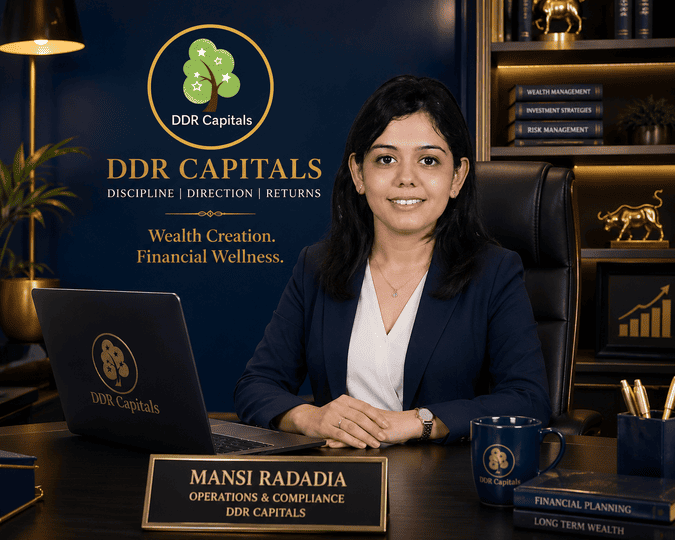
Mrs. Mansi Radadia , Operations & Compliance Officer, DDR Capitals. Contributor – Investor Education Series. With a strong focus on investor servicing, operational excellence and regulatory compliance, she is committed to helping investors navigate their financial journey with confidence. She believes successful wealth creation is built on discipline, informed decision-making and staying invested through changing market cycles. She actively supports investor education initiatives and encourages investors to explore Investor Education Resources.
About DDR Capitals
DDR Capitals is committed to empowering financial wellness and wealth creation through investor education and financial product distribution. Through its Investor Education Series, DDR Capitals shares practical information to help investors understand investment concepts, develop financial awareness and make informed decisions.
Disclaimer
This article is intended solely for investor education and general awareness. It should not be construed as investment advice, a recommendation, or a solicitation to buy or sell any financial product or security.
Investments in securities and mutual funds are subject to market risks. Read all scheme-related documents carefully before investing. Past performance does not guarantee future returns. Investors should assess their financial objectives, risk profile and investment horizon before making investment decisions.
Learn Through Your Investment Journey
Investing is not just about selecting financial products or tracking market returns. It is about understanding your financial goals, developing the right habits, managing risk and making informed decisions.
Through the DDR Capitals Investor Education Series, we bring you practical articles covering investment concepts, investor behaviour, mutual funds, portfolio management and long-term wealth creation.
Whether you are beginning your investment journey or looking to become a more disciplined investor, explore our articles and strengthen your understanding—one step at a time.
Learn. Understand. Invest with Discipline.
Learn Through Your Investment Journey – DDR Capitals
Explore our Investor Education Series
| Article | Title | Read article |
|---|---|---|
| 8 | Power of Compounding in Investing | Read Article |
| 9 | Why Market Volatility Is Not the Real Risk | Read Article |
| 10 | The Hidden Value of Financial Advice | Read Article |
| 11 | The 10-Minute Investment Health Check Every Investor Should Do | Read Article |
| 12 | Are You Investing for a Goal or Just for Returns? | Read Article |
| 13 | Your Investment Portfolio Has a Personality — Does It Match Yours? | Read Article |
| 14 | The Investment Mistakes That Look Smart at First | Read Article |
| 15 | One Portfolio, Many Goals: How to Organise Your Investments | Read Article |
| 16 | When Should You Review Your Mutual Fund Portfolio? | Read Article |
| 17 | The 5 Questions to Ask Before You Invest in Any Fund | Read Article |
| 18 | Why Your Income Should Change the Way You Invest | Read Article |
| 19 | The Power of an Investment Checklist: Think Before You Invest | Read Article |
| 20 | Build Wealth Without Watching Your Portfolio Every Day | Read Article |
The care you put into the writing really comes through. Thank you for making this such a pleasant read.
Thank you, Estelle, for your thoughtful feedback. We are delighted to know that you enjoyed reading the article. At DDR Capitals, we believe that financial awareness and disciplined investing can make a meaningful difference in an investor’s journey. We look forward to sharing more valuable insights with you!