
Asset Allocation for HNI Investors: A Structured Framework
Why HNI Portfolios Underperform is rarely about opportunity; it is about structure and discipline in asset allocation. Wealth creation for high net-worth investors is driven less by short-term market timing and more by disciplined asset allocation within a structured wealth management framework.
For HNI investors, asset allocation must account for liquidity requirements, taxation exposure, business income variability, and inter-generational objectives. A structured framework replaces reactive decision-making with governance-driven capital stewardship. Asset allocation for HNI investors remains the primary determinant of long-term portfolio outcomes.
Why HNI Portfolios Underperform: Behavioral Bias and Overtrading
High net-worth portfolios often underperform not due to lack of opportunity, but due to behavioral distortion. Concentrated bets, overconfidence in select sectors, and frequent tactical shifts can erode structural discipline. In volatile cycles, reactive decision-making increases turnover, transaction costs, and tax drag — all of which dilute compounding efficiency.
A structured asset allocation framework for HNI investors mitigates these risks by imposing mandate-based exposure limits, rebalancing discipline, and governance oversight. Long-term capital growth is rarely a function of prediction accuracy; it is a function of process consistency.
Why Asset Allocation Matters More Than Stock Selection
Empirical research across global markets consistently demonstrates that asset allocation contributes more to portfolio performance than individual security selection. For sophisticated investors, the primary question is not “which stock,” but “what allocation framework.” A structured framework replaces reactive decision-making with governance-driven capital stewardship supported by institutional-grade advisory oversight.
A well-defined allocation architecture:
- Reduces concentration risk
- Improves downside resilience
- Enhances post-tax compounding
- Aligns capital with long-term objectives
Disciplined allocation creates structural stability during volatile market cycles.
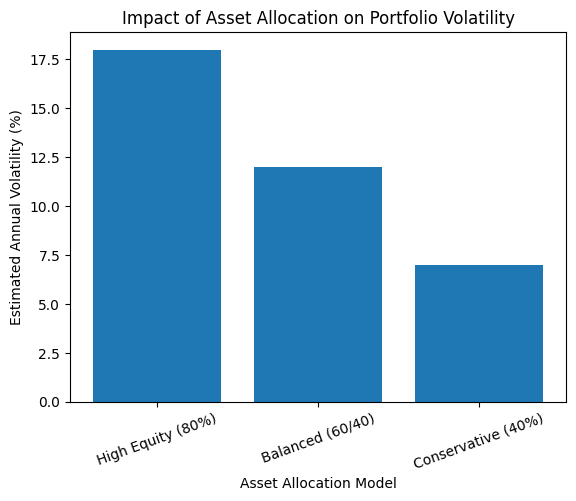
Empirical portfolio modelling demonstrates that asset allocation materially influences portfolio volatility. Higher equity concentration increases return potential but also amplifies drawdown exposure. Balanced allocation frameworks structurally moderate annualized volatility while preserving long-term growth orientation./heading
Portfolios
Allocation and Volatility Sensitivity
Illustrative comparison of volatility across allocation models.
Core Allocation Layers for HNI Portfolios
A robust framework for high net-worth investors typically integrates three strategic layers:
1. Growth Allocation
Equity exposure, both domestic and global, designed to capture long-term economic expansion. Allocation levels are calibrated based on risk tolerance, time horizon, and liquidity comfort.
2. Stability Allocation
Fixed income instruments, debt strategies, and capital-preservation vehicles designed to mitigate volatility and provide liquidity support.
3. Diversification & Alternative Allocation
Selective integration of alternative investment funds within a broader portfolio strategy, and differentiated strategies to enhance portfolio depth and non-correlated return drivers.
Strategic diversification reduces dependence on a single asset class.
https://ddrcapitals.com/alternative-investment-funds/ment Funds
Tax-Aware Allocation Considerations
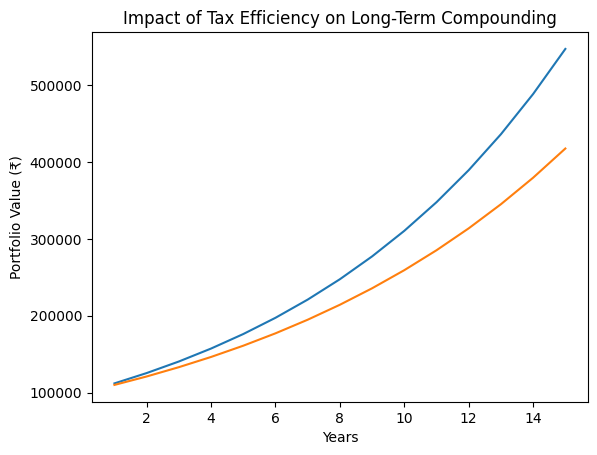
For HNI investors, post-tax return efficiency materially influences long-term outcomes. Asset allocation decisions must evaluate:
- Capital gains holding periods
- Income classification impact
- Portfolio turnover discipline
- Alternative vehicle tax treatment
Coordinating asset allocation with structured tax planning services enhances compounding potential.
https://ddrcapitals.com/tax-planning/Internal link here: Tax Planning page
Risk Governance and Rebalancing Discipline
Asset allocation is not static. Periodic review and rebalancing are essential to maintain intended risk exposure.
A governance-led review framework ensures:
- Equity exposure does not exceed mandate
- Defensive allocation remains sufficient
- Liquidity buffers are preserved
- Strategic objectives remain aligned
This disciplined oversight distinguishes structured wealth management from reactive inv
Integrating Business Cash Flow with Investment Allocation
For business owners, portfolio strategy cannot operate independently from enterprise liquidity dynamics. Surplus allocation must consider:
- Business cyclicality
- Working capital requirements
- Capital expenditure planning
- Succession and estate structuring
Integrated capital architecture ensures portfolio decisions support, rather than conflict with, business strategy. https://ddrcapitals.com/wealth-management-services/
Conclusion
Asset allocation is the foundation of disciplined wealth management for high net-worth investors. A structured, tax-aware, governance-driven framework enhances long-term capital preservation and growth while reducing behavioral distortions across market cycles.
For investors seeking institutional-grade portfolio architecture, asset allocation must evolve from periodic adjustment to structured financial governance.