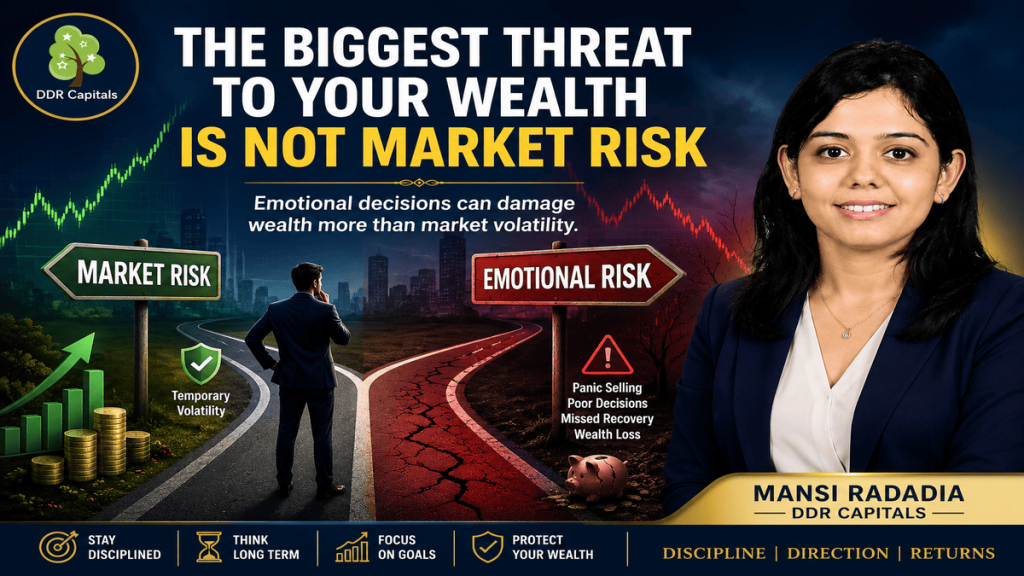
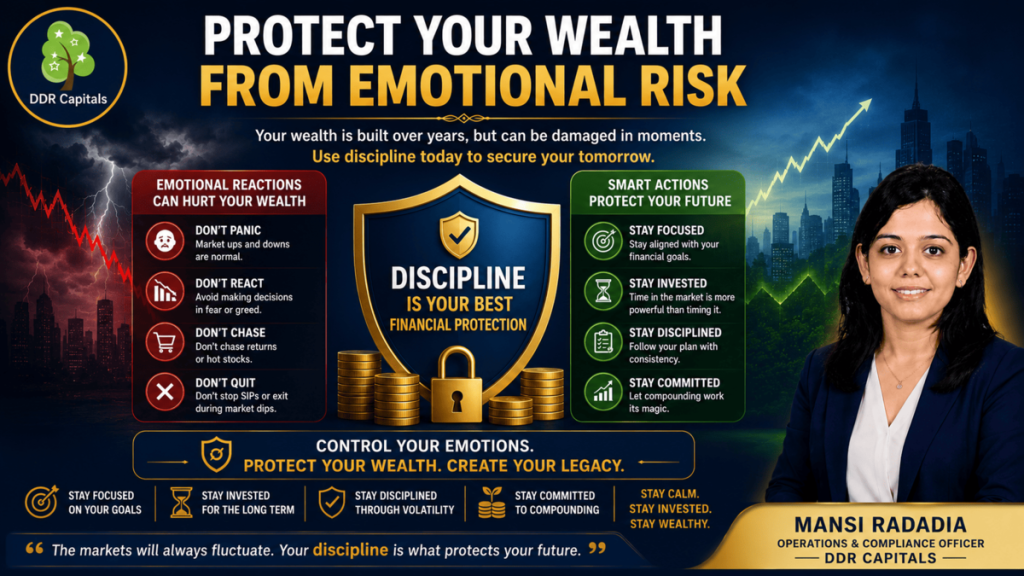
Fear, greed and emotional decisions often cause more damage than market volatility.
Many investors believe that market risk is the biggest threat to wealth creation. They worry about market corrections, economic uncertainty and short-term volatility. While these risks are real, there is another risk that often causes greater damage: emotional decision-making. Fear, greed, impatience and overconfidence frequently influence investment decisions during periods of uncertainty. Understanding and managing emotional risk is essential for achieving long-term financial goals.
Why Emotional Risk Is More Dangerous Than Market Risk
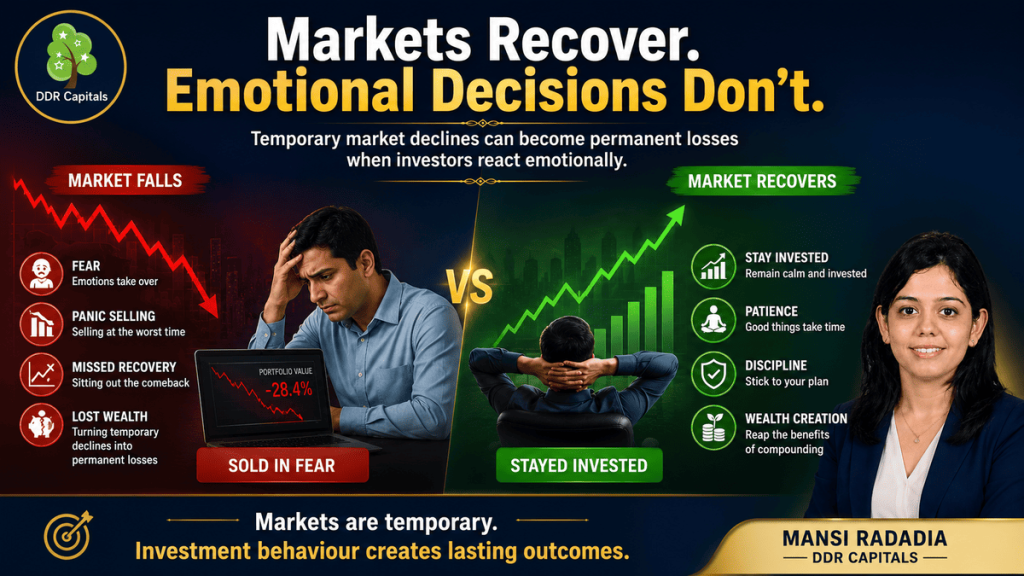
Market volatility is temporary. Markets have historically experienced corrections, recoveries and long-term growth. Emotional reactions, however, can convert temporary declines into permanent losses. Investors who panic during market downturns often sell quality investments at the wrong time and miss the eventual recovery. In many cases, wealth is destroyed not by the market itself but by the decisions investors make during periods of stress.
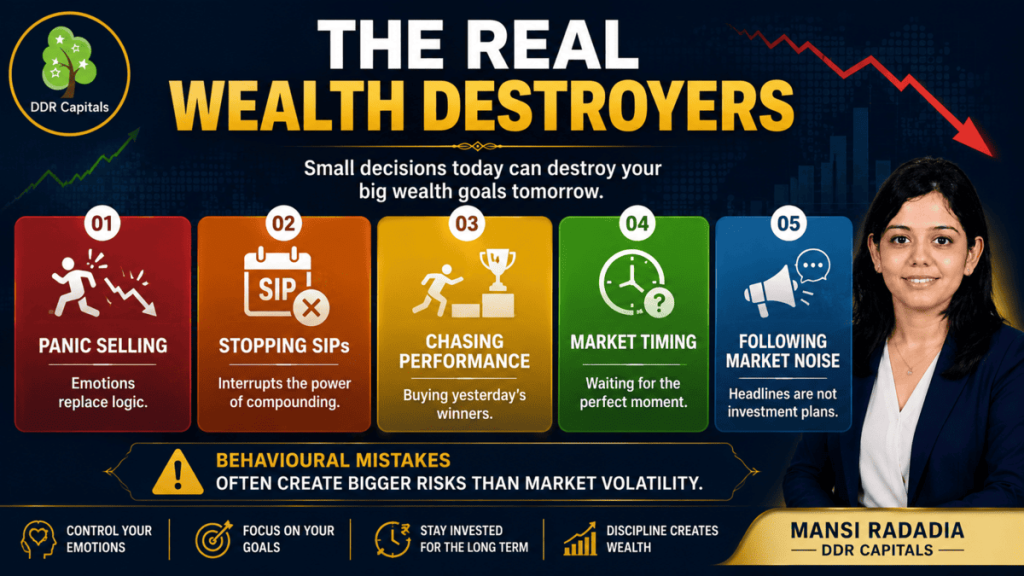
The Real Wealth Destroyers
Investors often focus on market movements while ignoring behavioural mistakes that quietly damage long-term returns. Panic selling during market declines, stopping SIPs, chasing recent performance, trying to time the market and reacting to news headlines can significantly reduce wealth creation. These decisions are usually driven by emotions rather than investment fundamentals.
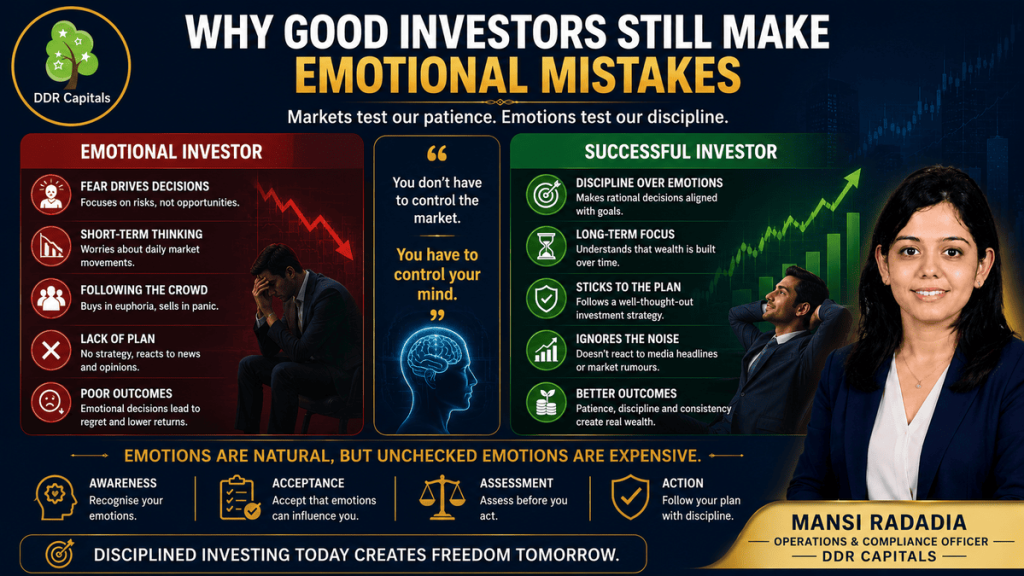
Even knowledgeable investors are not immune to emotional biases. During periods of uncertainty, fear can encourage investors to exit investments prematurely. During bull markets, overconfidence can lead to excessive risk-taking. Human psychology naturally seeks comfort and certainty, but successful investing often requires patience, discipline and the ability to remain focused on long-term goals despite short-term noise.
Successful investing is not about predicting every market movement. It is about creating a disciplined process and following it consistently. Investors can reduce emotional risk by maintaining a diversified portfolio, continuing SIPs during market corrections, focusing on long-term goals and reviewing investments periodically rather than reacting to daily news. A structured investment approach helps investors remain confident even during volatile market conditions.
Questions Every Investor Should Ask
Have you ever sold an investment because of fear?
Have you stopped a SIP during a market correction?
Do market headlines influence your investment decisions?
Are your decisions driven by emotions or long-term goals?
Do you have a disciplined investment process?
Final Thoughts
Market risk is an unavoidable part of investing, but emotional risk can be managed. Investors who remain disciplined, stay invested and focus on long-term objectives are often better positioned to build wealth over time. The greatest threat to wealth creation is not always market volatility—it is the emotional decisions investors make during uncertain periods.
Market Risk vs Emotional Risk
Market risk affects every investor and cannot be completely avoided. Economic events, interest rate changes and global uncertainty can temporarily impact investment values. Emotional risk, however, is different. It arises when investors react impulsively to market movements. Selling during panic, stopping SIPs and constantly changing investment strategies can have a lasting impact on wealth creation. While market risk is temporary, emotional decisions can permanently reduce long-term returns. Investors who understand this difference are often better prepared to stay invested and achieve their financial goals.
Call to Action
What has been your biggest investing challenge: market volatility or emotional decision-making?
Share your thoughts in the comments or connect with DDR Capitals to discuss your long-term investment journey.
About the Author
Mrs. Mansi Radadia serves as Operations & Compliance Officer at DDR Capitals. With a strong focus on investor servicing, operational excellence and regulatory compliance, she is committed to helping investors navigate their financial journey with confidence. She believes successful wealth creation is built on discipline, informed decision-making and staying invested through changing market cycles.